By Audrey Glass
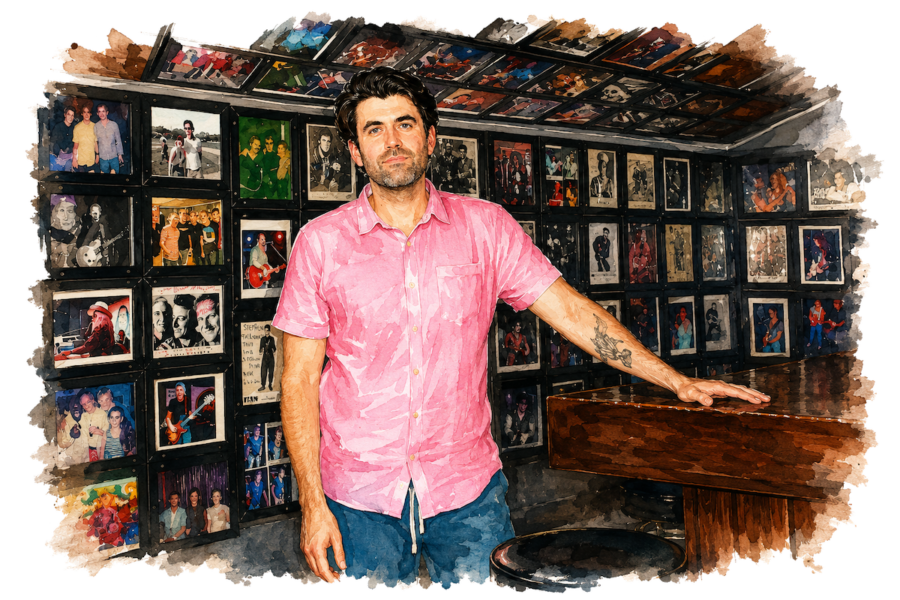
Max Honerkamp
Stephen Talkhouse General Manager Max Honerkamp grew up behind the bar of the legendary Amagansett venue. Today, he oversees bookings and day-to-day operations.
For readers who may not know, can you tell us about the history of Stephen Talkhouse?
Stephen Talkhouse originally started as a fisherman’s house in 1832. Around the 1920s, it became a restaurant called the Amagansett Inn, which was owned by an Italian family until the 1960s. Then, around 1970, it officially became the Stephen Talkhouse as a bar and restaurant. My family took over in 1987. I was born in 1989, so I’ve grown up here and have done just about every job, from helping set up each day to now managing the business. My father [Peter Honerkamp] is still involved, but I now handle most of the daily operations, including bookings and running the venue.
What are some of your earliest memories here?
It’s hard because it’s always been home. When something is part of your everyday life, it’s hard to determine what’s special and what’s just normal. My earliest memories—outside of running around, making Shirley Temples, putting whipped cream in cups, and watching sports games—were when Sting played here.
I didn’t really know who Sting was, but I still remember the concert. I remember hearing “Roxanne” and “Message in a Bottle,” and there was this big TV camera rig moving through the bar. That was the first time it felt like this is something special.
What are you looking for when deciding who gets booked?
It’s tricky because you have to figure out what the crowd wants. As popular as the place is, it’s not New York City—you don’t have millions of people who are going to come out for any type of show. You have to book what will work. It’s not that I’m not willing to take a chance on someone who’s up-and-coming. You just want the show to do well—for the artist, the bartenders, and everyone else. A big part of it is whether they have a draw.
Stephen Talkhouse is known for its surprise performances. How did those shows first come together?
Those shows all started through Sirius XM. Scott Greenstein is the president of Sirius, and he has a house out here and has always been a big fan of the Talkhouse. One day he had the idea to bring in Coldplay, and it worked. The next year it was Dwight Yoakam, then The Killers, then Mumford & Sons. Since then, we’ve had everyone from Ed Sheeran to Metallica. Those shows have almost become what defines our summers.
Then there are the completely unexpected pop-ins. Someone like Paul McCartney might stop by because a friend is playing. Jimmy Buffett used to do the same thing when friends or artists he was mentoring were performing. I think because the Talkhouse started as a house, people feel comfortable here. You never know who’s going to walk through the door.
What makes the venue so appealing to artists?
I think it’s such an intimate environment. The stage is right there. That’s what makes it difficult in some ways, but also what makes it special for these shows. In a lot of venues you’re below the artist, which is better for sight lines, but here you’re right there with them. The crowd is right there, too, so there’s a real connection. I also think you never know who’s in the audience. You could have a surfer standing next to the head of a record label. When Gary Clark Jr. played here, Lorne Michaels, Jon Bon Jovi, Roger Waters from Pink Floyd, and Paul McCartney were all in the crowd. That’s part of what makes it cool.
How would you say Stephen Talkhouse resonates across generations?
It’s interesting now because people come in and I knew their parents when they were customers. I joke with my friends that the day their daughter, who’s just been born or is 1 year old, starts coming here is probably the day I quit. That’ll get a little weird. I think people have a connection to this place because it’s timeless, but it also doesn’t ignore that times are changing. Kids can walk in with their parents, who used to come here themselves, and they both know the bartender or the door guy. That consistency is important.
What excites you most about the future of Talkhouse?
The biggest thing is a 400-page coffee table book that’s coming out this summer. My dad is the main voice behind it, but it includes stories and memories from people dating back to before our family owned the Talkhouse. It catalogs the past 40 years of the venue through photos and stories.
We’re also starting a record company of sorts. It began with a live compilation album from last summer featuring eight different acts. It’s a charity album, with a portion of the proceeds benefiting MusiCares. Right now, the idea is to build a catalog of live performances from the Talkhouse, but maybe one day it grows into something more. I’d love to find a young band we believe in and help them grow. That’s always been a dream of mine—booking a band here and then watching them eventually play Madison Square Garden.