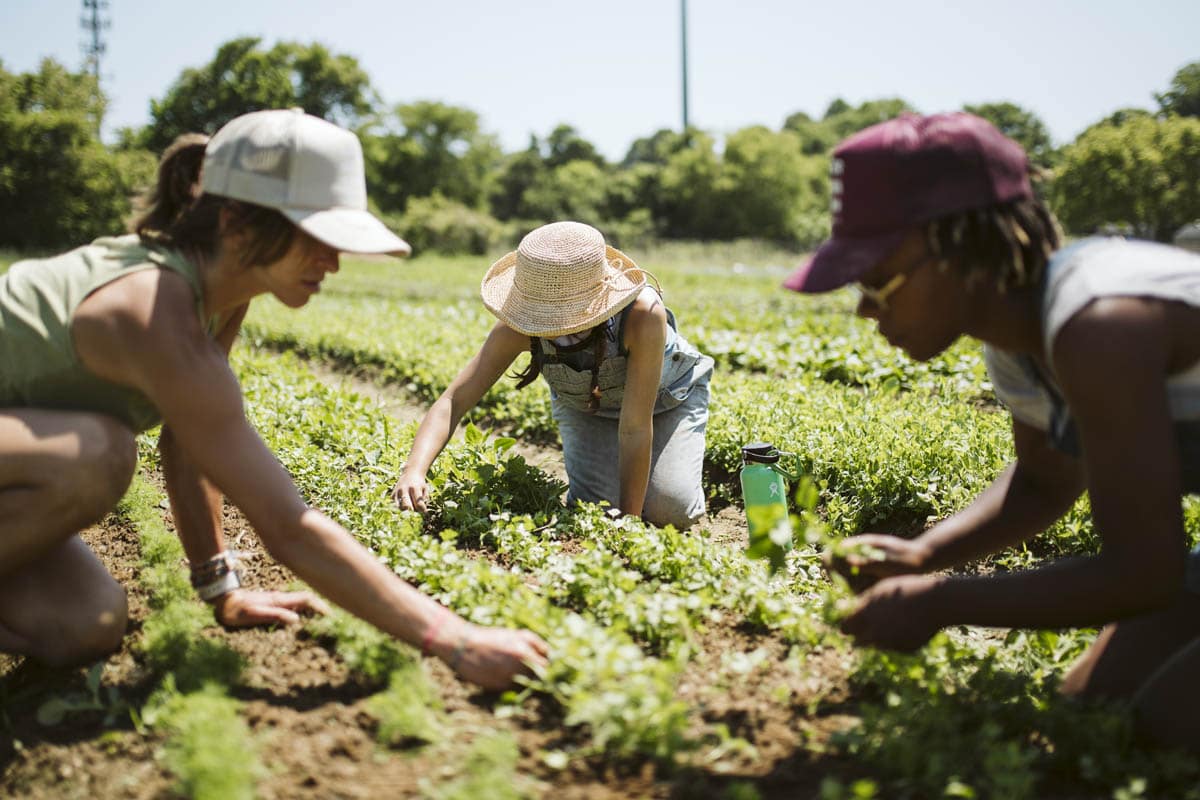
Amber Waves Farm has become one of the East End’s most beloved gathering places—a thriving mix of working farmland, educational resources, community space, and local food destination rooted in purpose. The farm and market are located at 367 Main Street, Amagansett and open daily.
What began as a shared dream between two young farming apprentices has grown into a year-round nonprofit that feeds, teaches, and welcomes thousands of people each season. Today, co-founders Amanda Merrow and Katie Baldwin continue to nurture the land while carrying out their mission to educate and inspire through food and farming.
From securing ownership of their farmland to expanding their programs, opening a year-round market, and welcoming visitors to explore the property, Amber Waves has become an essential piece of the East End’s agricultural and cultural landscape. Amanda and Katie spoke about their journey, the mission that continues to guide them, and the vision behind one of the most meaningful community-driven farms on Long Island.
What core mission drives the farm today, and how has that mission evolved since the beginning?
Amanda & Katie: We met in 2008 while completing a farming apprenticeship at Quail Hill Farm where we both discovered our shared love of farming. By that July, we were already dreaming up ways to continue farming together in Amagansett. When we founded Amber Waves Farm, our vision was to build something greater than ourselves—something that would outlive us. Our original idea, the “Amagansett Wheat Project,” grew out of a daydream to create a “pizza farm,” and our name, Amber Waves, pays homage to grain production—a line from the song “America the Beautiful”. From the beginning, we chose to be a nonprofit because our mission—to teach and connect people through food and farming—has always been at the heart of what we do.
When we launched in 2009, the Community Supported Agriculture (CSA) model became our lifeline, providing essential “seed money” at the start of the season and allowing us to begin with just 18 families.
Our mission—to educate and inspire through food and farming—continues to guide us, but today we’re able to reach more people in more ways. What began with a CSA and a few school field trips has grown to include a robust farming apprenticeship program, a children’s outdoor classroom and curriculum, publicly accessible fields, a year-round market and kitchen, and partnerships with local food pantries. As we’ve grown, so has our ability to serve and strengthen our community.
In 2016, you became the owners of the farmland after years as tenants. What did that milestone mean for the farm’s future?
Amanda & Katie: Securing ownership of our farmland was a defining milestone for us. It provided us the security to think beyond daily operations and one season ahead. We could start thinking about ourselves as forever stewards of the land. It gave us the security to think long-term—to invest in soil health, infrastructure, and programs that take many years to build rather than a few seasons.
That milestone wasn’t just about stability; it was about possibility. It allowed us to dream bigger, expand our programs, care for our soil and create a lasting home for the next generation of farmers and food advocates to learn, grow, and thrive. Interestingly, our farmland has been woman-owned since the 50s, with ownership transferring from Pat Struk, founder of the Amagansett Farmers Market to Maggie deCuevas, who bought and preserved the land in 2008, and then to Amber Waves in 2016. We’re really proud of that female lineage.
Education and community access are key to your work — how do you integrate those into a working production farm?
Amanda & Katie: Our entire farm is a classroom. We’re vertically integrated—we start lettuce from seed in our greenhouses and serve plated salads in our market. That gives us the opportunity to teach our farming apprentices about the food system at every step. These aspiring farmers learn how to grow food, help run our CSA program, harvest for our food pantry partners, and keep our market stocked with fresh produce for our members and customers. Meanwhile, the fields are open to the public for exploring, and our outdoor classroom teaches kids about sustainability and seasonality.
Every dollar earned through our market directly supports our core programs: Children’s Education, new farmer training through our apprenticeship program, food access through tens of thousands of pounds of donated produce, and maintaining public access to the farm. This full-circle approach is at the heart of what we do, giving everyone the opportunity to experience the complete journey of food production in one place.
Training future farmers and teaching children about food isn’t efficient, and it certainly isn’t inexpensive—but it’s vital work that we’re proud to lead. Within our apprenticeship program, integrating hands-on farmer training into daily production not only deepens the learning experience but also makes Amber Waves a uniquely rich place to grow and learn.
The East End has a unique agricultural and community landscape. How has being located in Amagansett / East Hampton shaped your farm’s identity?
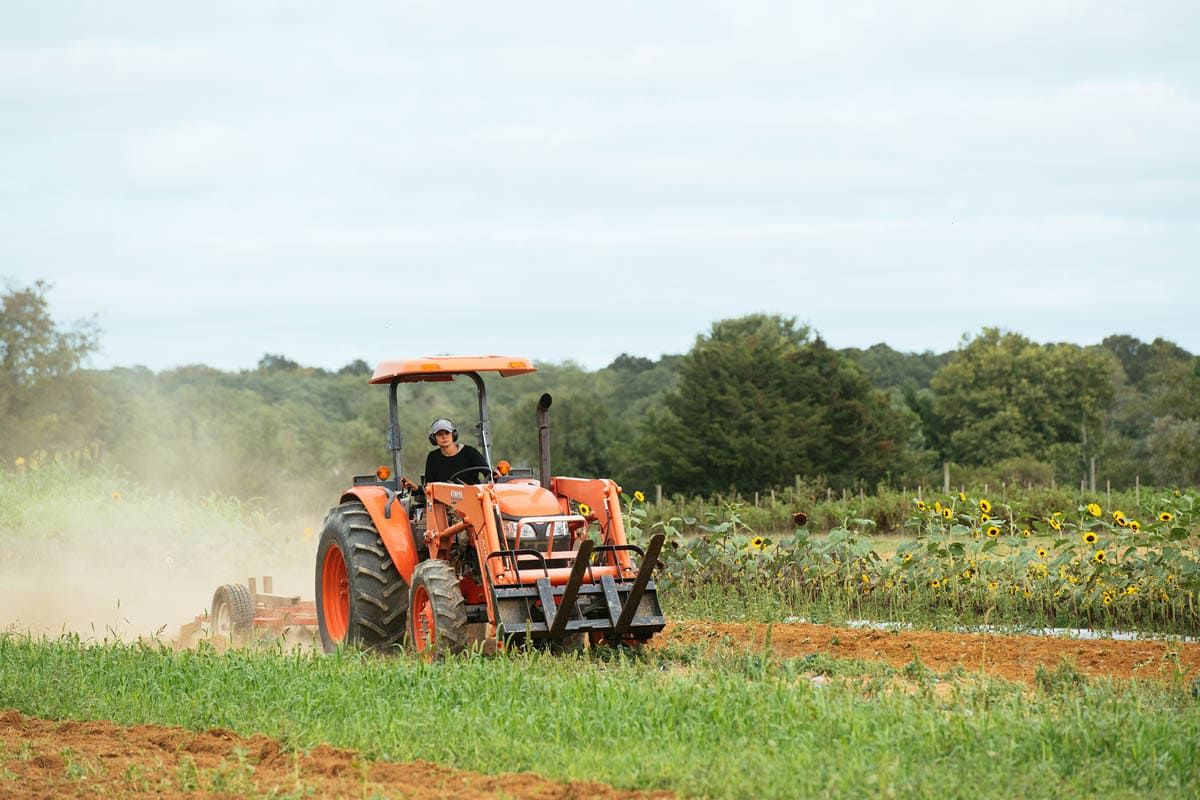
Amanda & Katie: The robust foodshed we have out here on the East End was one of the things that got us most excited about starting Amber Waves, and it still inspires us. The East End’s rich agricultural history, coastal environment, and deep appreciation for local food have all influenced our identity. We’re surrounded by generations of farmers, fishermen, chefs, wine makers, and educators who value stewardship and flavor of the land and sea; “farm to table” is deeply ingrained in our heritage out here.
The East End is home to some of the best soils in the country. Our soil type at Amber Waves is primarily Bridgehampton Silt Loam, which is almost entirely free of rocks, holds organic matter that feeds our soil microbes, and retains moisture but drains well. When people think about land in the Hamptons, soil is probably not the first thing that comes to mind, but for farmers out east, it’s at the core of our long history of successful farming here. The cost of land out east has forced farmers to be creative to keep their operations flourishing, through evolving their production to more high value-value crops (think wine instead of potatoes), and conservation tools like selling development rights on farmland to protect it in perpetuity. Many different sorts of people call the East End home: the Shinnecock, bonacers whose families have been here fishing and farming for hundreds of years, transplants from New York and elsewhere (including Katie and me, who weren’t born here), summertime vacationers, immigrants from across South and Central America, and seasonal workers from Europe and the Caribbean. We have all these groups in mind when we open our gates to the public and think of the farm as a place for everyone who wants to visit, learn, and work with us.
How do you decide on which programs or initiatives to launch, especially education- and outreach-focused ones?
Amanda & Katie: At Amber Waves, new programs and initiatives are shaped by both our mission and the needs of our community. We are always looking for the most effective ways to support our core purpose—educating, feeding, and connecting people through food and farming. Many of our education and outreach programs have grown directly out of conversations with parents, teachers, apprentices, and visitors who share what they need or hope to experience on the farm. Because we operate as a working farm and a nonprofit, we’re constantly balancing production realities with our educational goals, ensuring that each new program is both meaningful and sustainable. Ultimately, our goal is to create opportunities that invite people of all ages to engage with the land, learn where their food comes from, and feel a genuine sense of belonging in our shared food system.
What role does sustainability—both environmental and social—play at Amber Waves, and how do you put that into practice?
Amanda & Katie: We think about sustainability as stewarding the farm and our natural resources for future generations. So, while we’re a production farm with customers depending on us, we’re also thoughtful about using our inputs—nutrients, water, and labor, to name a few, as efficiently as we can to both preserve resources and remain economically viable. These are also the lessons we want to teach the aspiring farmers that train with us in our Apprenticeship Program, with the intention that they’ll practice sustainable methods in their own future operations.
The East End can feel isolated at times—we’re surrounded by water on three sides, there are only a few ways in and out, and we’re highly seasonal. We love the seasonality of the community, it’s incredible to be inundated by nearly a thousand customers a day in the height of the season and also very meaningful for us to function as a place for quiet reflection in the early morning hours and throughout the off-season. The best way we’ve found to feel socially sustainable in our own lives is to use the farm as a place to welcome and gather our friends and neighbors to enhance our lives out here.
What would you say is the one thing you wish the community understood better about farms like yours or the local food system?
Amanda & Katie: There was a lot of chatter and press this summer about the high price of food on the East End. The costs of living and doing business out here are high, for farmers too. Access to housing, increasing costs of labor and inputs all put pressure on the agricultural community. On top of that, we have the weather to contend with. Our work is highly seasonal; in our northeastern climate we have about half of the year to produce what we can to support us the rest of the season. We do our best to keep our prices accessible to as many people as we can, and we so appreciate customers stopping at our stands, markets, and CSAs as a part of their regular routine. That support keeps us going!
For people who want to get more involved (CSA members, volunteers, visitors), what are the best ways to connect with Amber Waves right now?
Amanda & Katie: We deeply value the community that makes our work possible. Financial support plays a vital role in sustaining our mission. Every contribution directly supports our work to grow healthy food, expand educational programs, and preserve farmland for the future. For those who want to get more involved, there are meaningful ways to connect with us:
– Become a sustaining supporter: Financial gifts of any size help us grow food for our community, host students and apprentices, and maintain our farmland.
– Join the CSA: Our Community Supported Agriculture members are at the heart of what we do—sharing in the harvest and supporting our farmers directly.
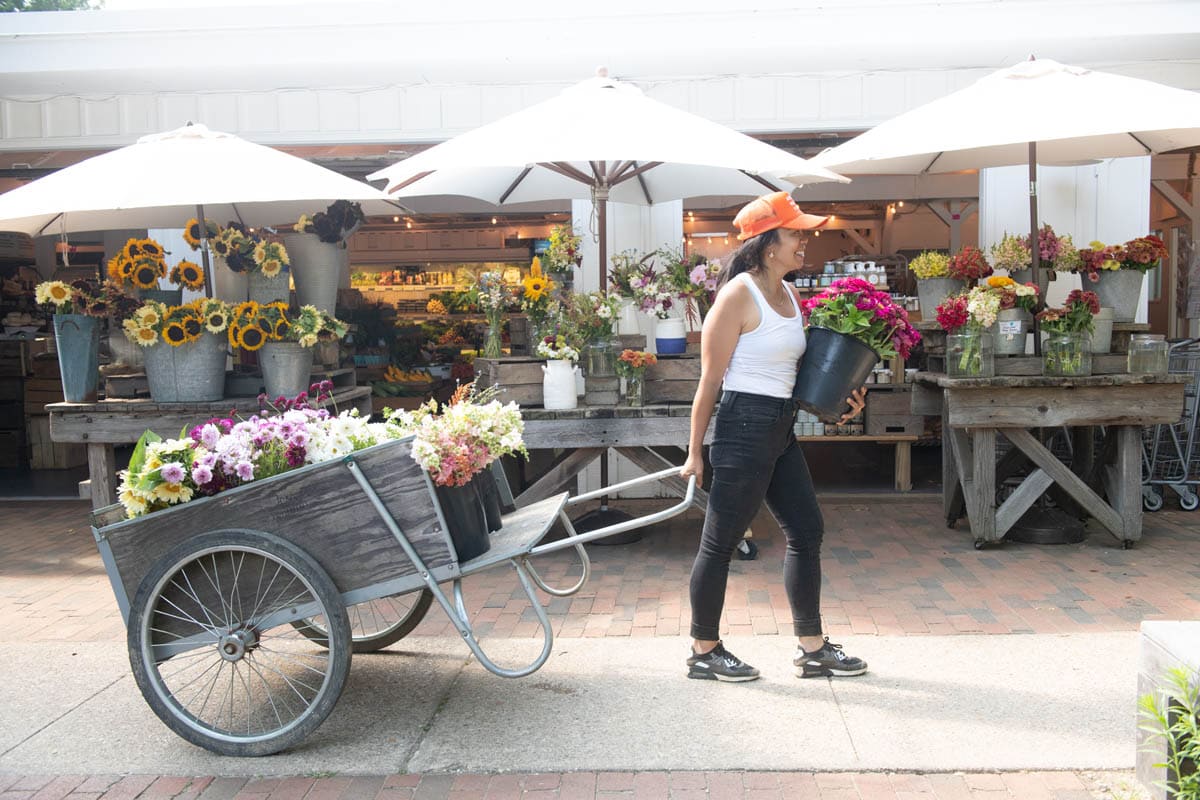
– Visit and engage: Come by the farmstand, say hi to the goats, attend one of our fundraisers, kids’ programs, or community gatherings—there’s always something happening here.
Is there a story or moment from the farm’s journey that still stands out to both of you—something that captures what the farm is really about?
Amanda & Katie: Walking through the fields while everything is happening at once—our majority female farm crew out in the field on tractors, children and families exploring the outdoor classroom, CSA members harvesting in the flower fields, the market bustling with shoppers, and friends meeting or catching up at the picnic tables. When the whole ecosystem is active like that, we love it. We set out to create something bigger than ourselves that the community could call their own, and those moments show us we’re achieving what we set out to do.
What are some of the most meaningful changes you’ve seen at Amber Waves in recent years (for example, new programs, greater scale, or new partnerships)?
Amanda & Katie: When we first took over the market in 2017, we were seasonal, only open May through Thanksgiving. The influx in population that happened during COVID changed that, and now we’re open year-round, we close for just a couple weeks in late February. We are so proud to be a year-round employer to our incredible team, and also to offer our products and community space to the public throughout the year. We have free Wi-Fi and move tables indoors for the winter, it’s fun to host people during this cozier, slower time of year.
The general scope and scale of our programs have grown considerably since we started. One acre of production in 2009 has grown to 45 in 2026; 18 CSA increased to 375, a crew of two has swelled to more than a hundred, and a few dozen field trips a year has evolved into a dedicated outdoor classroom and year-round teaching curriculum.
To learn more about Amber Waves Farm and how to get involved, click here.