


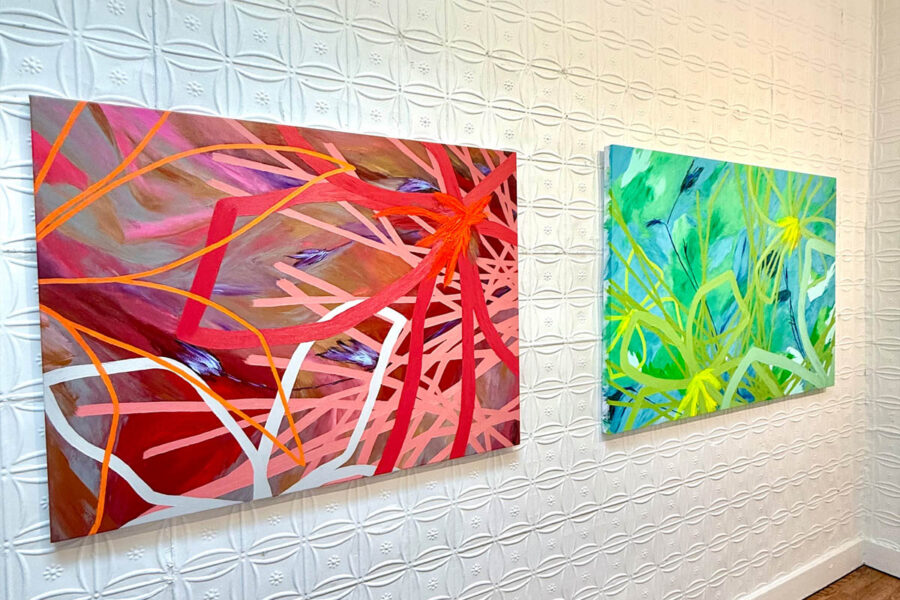
From her magnificent modern home in Sag Harbor, Filipina-American artist Rose Cameron is entirely in her element, happily weaving and painting as she prepares for her groundbreaking solo exhibition, Forever. For Now., at Sara Nightingale Gallery (July 10 to July 30).
This exhibition—the first solo show for a Filipina-American artist in the Hamptons—illustrates how Sag Harbor has become a major cultural outpost and contributor to the art world. For Cameron, this is a deeply personal homecoming and a point of pride for her to contribute to the Sag Harbor arts community, which she has seen develop firsthand.
Beyond Sag Harbor, Cameron’s work has received considerable international attention; exhibiting work in NY, Manila, Singapore, and Jakarta; as well as being featured in embassies, universities, and many private collectors.
For the artist, Sag Harbor and North Haven represent something more than a background—they are incubators. After spending years embedding her Filipina heritage into the rhythms of life in this home, with Forever. For Now., the artist is now sharing that body of work with the thriving Sag Harbor arts community that she has seen develop over the years.
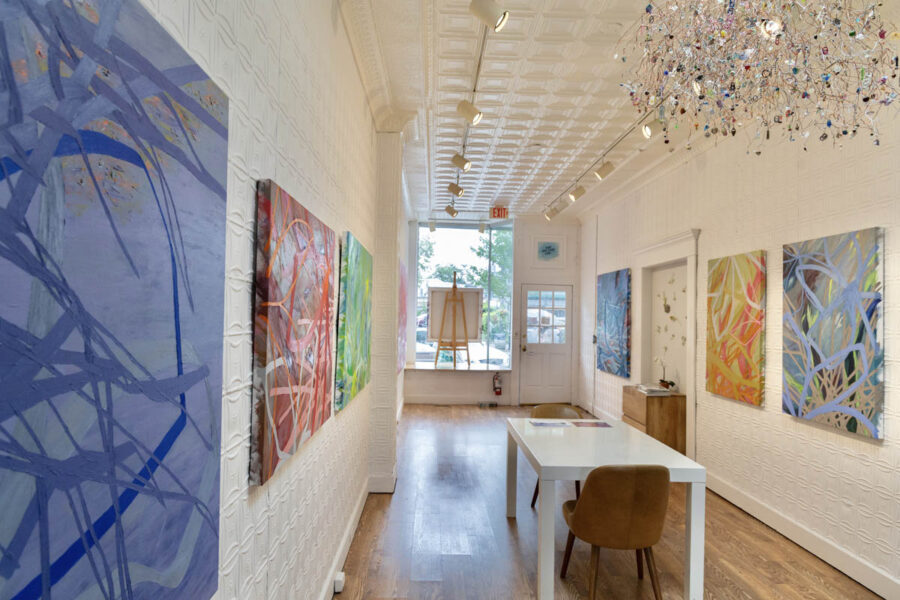
Sag Harbor’s cultural landscape is flourishing thanks to visionary spaces like Sara Nightingale Gallery and The Church—both instrumental in bringing internationally recognized artists to the Hamptons. Sara Nightingale has showcased global contemporary figures who rarely exhibit on Long Island, while The Church, housed in a historic converted church, presents exhibitions and events that bridge local audiences with global artistry. Together, they have elevated Sag Harbor as a serious artistic destination that attracts and inspires groundbreaking art.
This exhibit is both a beginning and culmination of identity reclaimed, of presence declared, and of Sag Harbor’s place on the international arts stage. As an artist, she weaves her identity into each work, bridging Filipino roots and American life. “I’m tapping into an identity that I had rejected for years.… My work tells a story that I once denied but which now I celebrate and honor.”
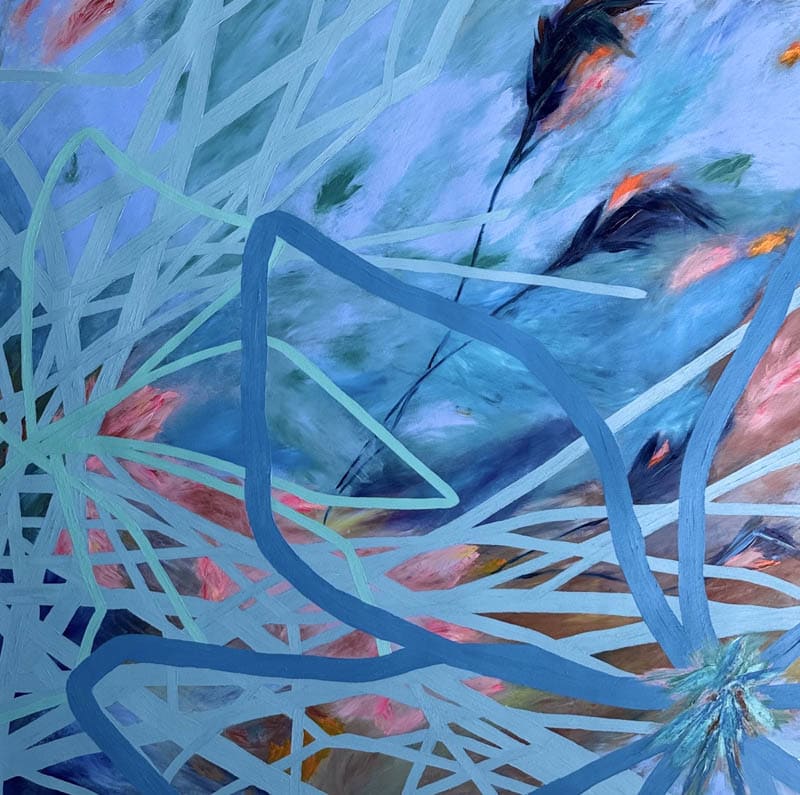
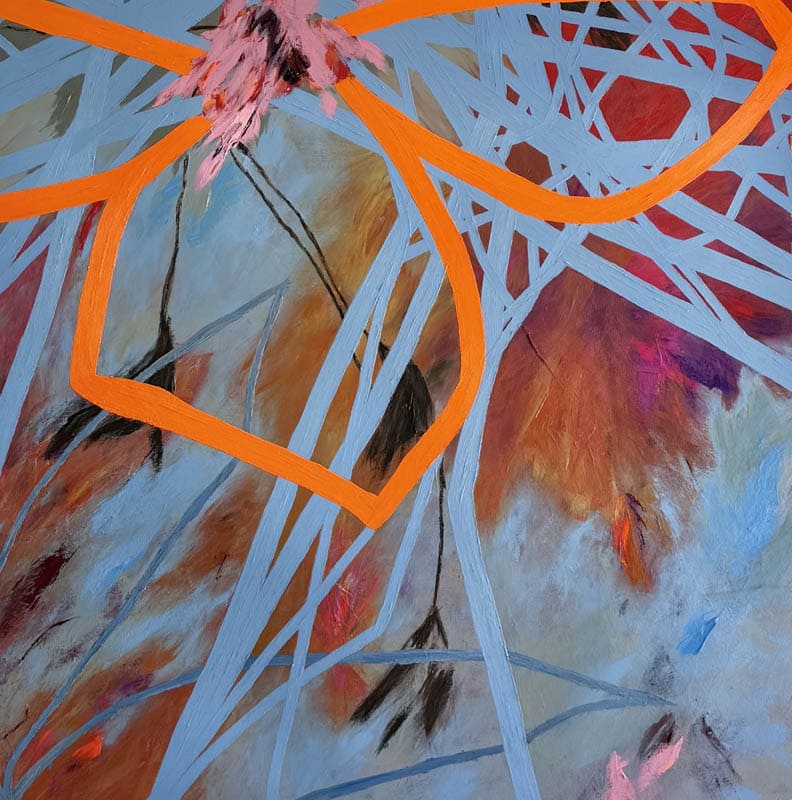
The works on exhibition are evocative precisely because they reckon with memory’s transience. Cameron’s floral, bubble‑like forms—children’s hibiscus play in the Philippines—are joyful, ephemeral and indelible. “There is a preciousness to memory, allowing us to relive and preserve moments and experiences, even though all moments pass, bursting like bubbles. Many of these pieces depict the collecting and pounding of hibiscus in my girlhood in the Philippines… The flowers are in me.”
Her process—outlined in faint lines followed by mood-driven layers of color—is as emotionally layered as her work. “I start by composing the lines of a basket … planting the seeds … Once I have outlined, then I paint the background … But, the background keeps covering up the outline! … I keep repainting them as I fill in the background. Yes, I’ve been told before: Nobody does it that way!” Like memories, these outlines constantly shift but endure through attention.
Cameron tells me, “I’m less focused on control and more about allowing each piece to tell its own story. A piece is finished when it tells me what it is called.… my real joy comes from hearing how it impacts an audience.”
Cameron cites her life in Sag Harbor as a major inspiration for her art and describes her experience building her home as a harbinger of her creative future. Building the home taught her that a sanctuary must be honest and unique, a lesson she has carried into her art.
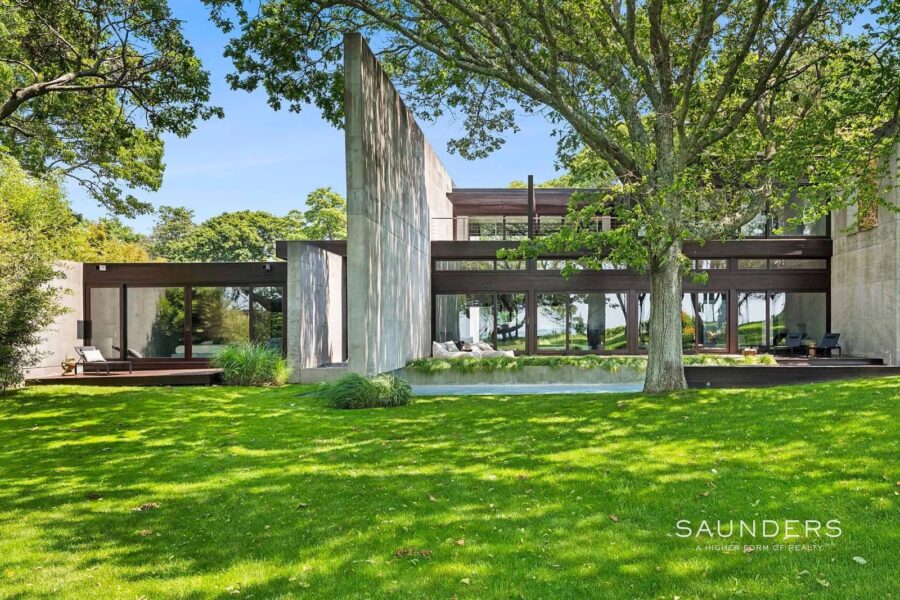
Rose’s home itself is a work of art, a structure that embodies memory, materiality, and identity. Architectural influences from Rudolph Schindler to Tadao Ando and Mies van der Rohe are visible, but the essence is her own: sculptural concrete walls, mahogany millwork as refined punctuation, and bamboo-lined serenity that prompts introspection. The discipline of the home and the instinct of her art form a dialogue—rigor and intuition grounded in honoring place and heritage.
The home and the art both reflect her identity: “Looking around the home, I realize now how much of the design language … is that of a retreat. So much like my father’s home in the Philippines.… Like my art, there is a subconscious bursting through of identity.” It was this clarity and intention—honesty, courage, identity—that the North Haven Village approval board saw from the start. They granted permits at the first meeting. “Finally,” they said, recognizing how her vision echoed the region’s modernist architectural legacy.
“My home in New York City is exceptionally colorful, but I find that here is the only place where I find peace and focus to make art. … there is a clarity here that allows me to find the root of a memory, and then paint it!” The simplicity of the house—its elemental harmony, open spaces, and lack of clutter—gives her the freedom to mine memory and emotion, bringing her Filipino heritage into each brushstroke.
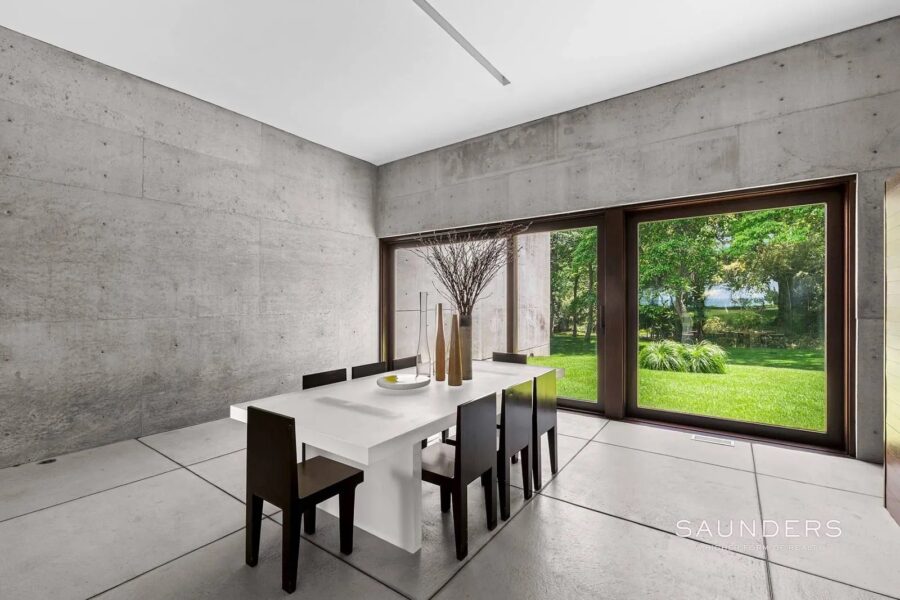
In contrast with muted grays of the home, Cameron’s art feels far more organic—intimate, even chaotic at times—but just as intentional. While the house is defined by structure and restraint, her artwork pulses with emotion and memory. Together, they form a striking dialogue: one of discipline and one of instinct, yet both grounded in the same commitment to honoring experience, heritage, and a sense of place.
In many ways, Rose Cameron’s story mirrors the arc of Sag Harbor itself—a place once known for quiet charm, now pulsing with creative energy. Her home, a personal sanctuary shaped by memory and intention, stands as a testament to the kind of inspiration that thrives here. Just as her work draws strength from a reclaimed identity, her artistic voice has been nurtured by the community she’s watched blossom around her. With Forever. For Now., Cameron not only shares the textures of her past, but also affirms Sag Harbor’s presence in the world of art.
![Sculpture @ Sylvester Manor: [R]evolution](https://hamptons.com/wp-content/uploads/event-manager-uploads/event_banner/2021/07/manor_house-350x350.jpg)


