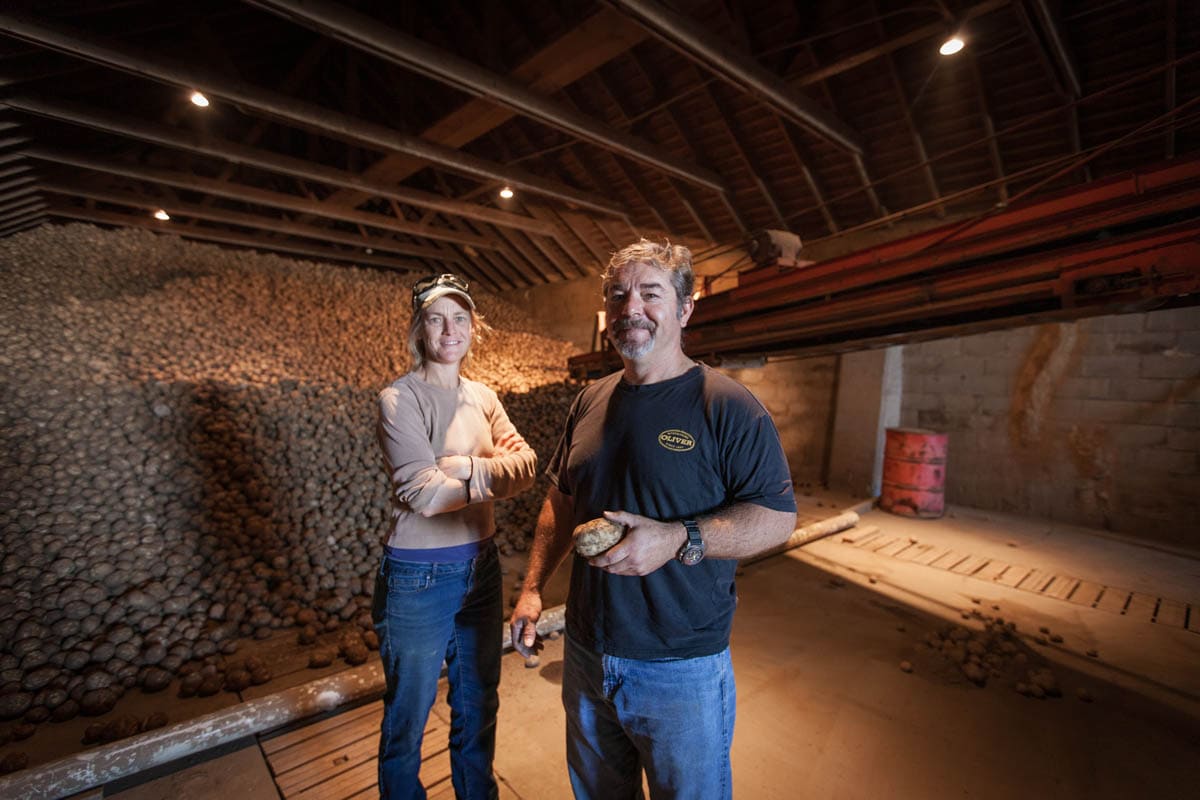
In the heart of one of the world’s most sought-after real estate markets, Dean and Marilee Foster are proving that the true “staying power” of the Hamptons lies in its topsoil. For this multi-generational farming family, the Sagaponack Farm Distillery represents a “vertical integration” of their heritage—a process where heirloom crops like Bloody Butcher corn and naked oats are grown, harvested, and bottled within a half-mile of the still. This conversation explores the necessity of listening to the “rhythm of the place” rather than “punching it in the face” touching on everything from the geological importance of the aquifer to the patient, “slow proofing” methods that preserve the nuanced flavors of the grain. Moving beyond a “farm aesthetic,” the Fosters offer a candid look at the reality of working with nature and the vital necessity of preserving the agricultural integrity of Sagaponack.
How much of what ends up in the bottle actually comes from your farm?
Dean: We are doing total vertical integration. All our distillables are right here. We’re growing the corn, the potatoes, and the grain all within a half-mile of the distillery. Most modern distilleries—even ‘craft’ ones—often source neutral grain spirits from massive industrial facilities, but our process is a literal extension of the soil beneath our feet.
What are the steps to converting your distillables into a finished spirit?
Dean: So, for example, this is a summer whiskey made from our oats. I believe just over five-years-old. It’s a little bit of a lighter whiskey, that’s what we want to portray. We want it so when people sip on it, it’s not that heavy bourbon or, you know, hot rye. What I’m doing is very slowly proofing it down. It went into this containment at about 122 proof. So of course we’re not going to drink it at that. You want to let it settle into itself so it preserves the nuanced flavors of the grain that are often lost in industrial production. By taking weeks rather than hours, you avoid creating “dissimilar tastes” that occur when a spirit is rushed.
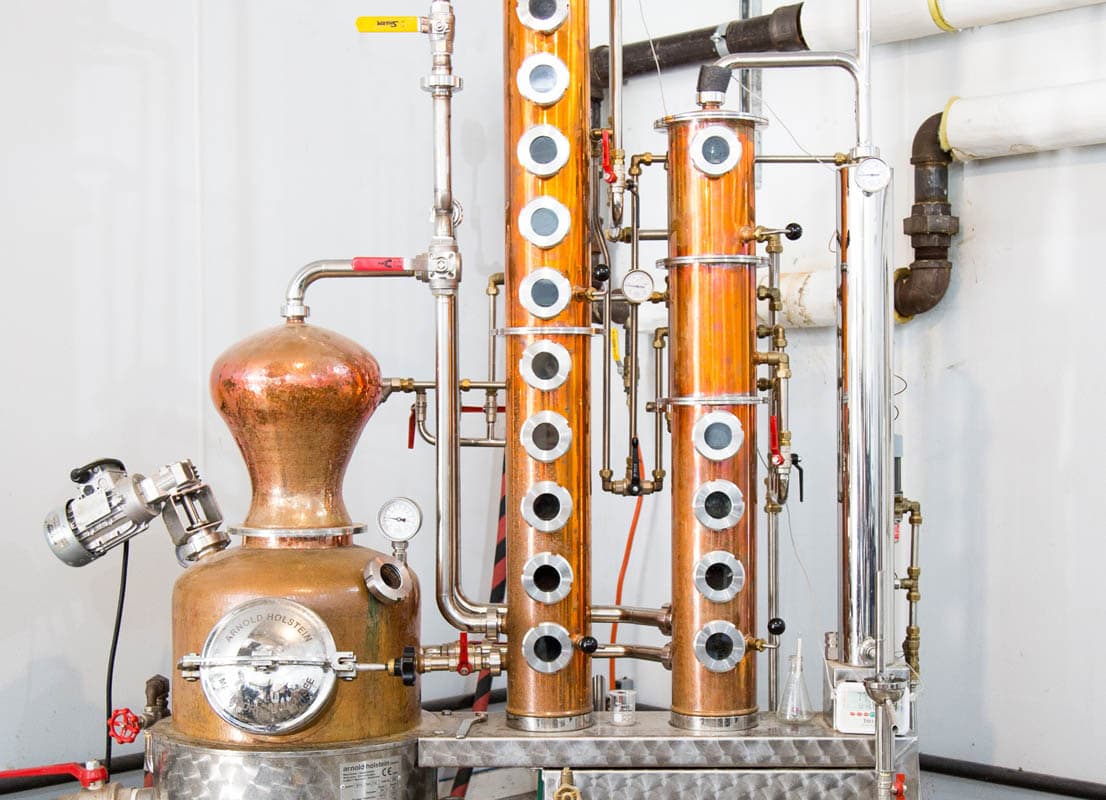
Marilee: With the oat, it’s not really whiskey, it’s kind of a different class of whiskey than most whiskeys are known, which are the bourbon and the rye. And so with the oat, it is a little bit unknown. And so we were, when as we put it together, it was like, well how do we want this to be different? And it was immediately apparent from its palate that it was just lighter. Like what it offered you wasn’t like other whiskeys and so that was when I think, sort of like writing a book, we came up with a name, which was Summer Whiskey, and then, you know, sort of putting it together after that. But yeah, I mean it is a little scary, you have to finish your product and then see how people react to it.
Like anything creative, right?
Dean: Even more so than that, though, is what we had to do initially. I paid a visit to High West, a small distillery out in Utah that runs the same equipment as we do. I went there and visited them, got to know Brandon, who is one of their distillers-sort-of oversight guy for their facility in Park City. They really were pushing oat whiskey, actually a white dog oat whiskey that wasn’t really a whiskey the way I see it, it was just really a white dog. And I tasted it and I thought, wow, that’s kind of interesting. So I came home and in the throes of starting things up, I went out and I planted probably three acres of what you call naked oats. Then when they were ready we harvested and had it up to the distillery to be mashed in probably 24 hours later
Oat Whiskey, who knew? And what about your potato-based whiskey?
Marilee: Well, that’s the Single Spuds. But you can’t call them whiskey. Because a potato is many things but it’s not grain (whiskey by definition is a distilled mash of fermented grains).
Dean: Right. Right.
Marilee: What’s interesting about this is it’s really experimental. We took these different potatoes, and we segregated them, the red potato, the white potato, the blue potato, and they’re all about the same age but you taste each one and elementally you can tell these are different than one another. So it kind of, you know, just opens up your mind to like how weird potatoes are and the fact, yeah, all these different colors, it all translates to something different in the end. So we bottled those when they were only like three years old, because that’s part of opening a distillery and wanting to have something aged, something different. But now we have one sitting around here somewhere that’s like six.
Dean: Oh, no, no, no..
Marilee: No, there’s some really old ones so we’re going to have to like rebrand them because they’re so different than the three-year-olds.
Dean: They’ll be ten years old next year.
Marilee: Yeah. And it’s like when we branded the first one it was Single Spud, it’s sort of, you know, a little lighthearted but the older ones are really interesting. But in the meantime we came out with our traditional whiskeys and people became far less interested in the Single Spuds, but they are really fun in cocktails.
Does that slow approach to whiskey mirror how you think about farming in general?
Dean: When you proof the whiskey down over weeks instead of hours, you don’t get those dissimilar tastes; you get a smooth, integrated spirit. It’s the same with the land—you can’t rush what’s natural. We need to stop ‘punching it in the face’ and start listening to the rhythm of the place.
What about your Vodkas?
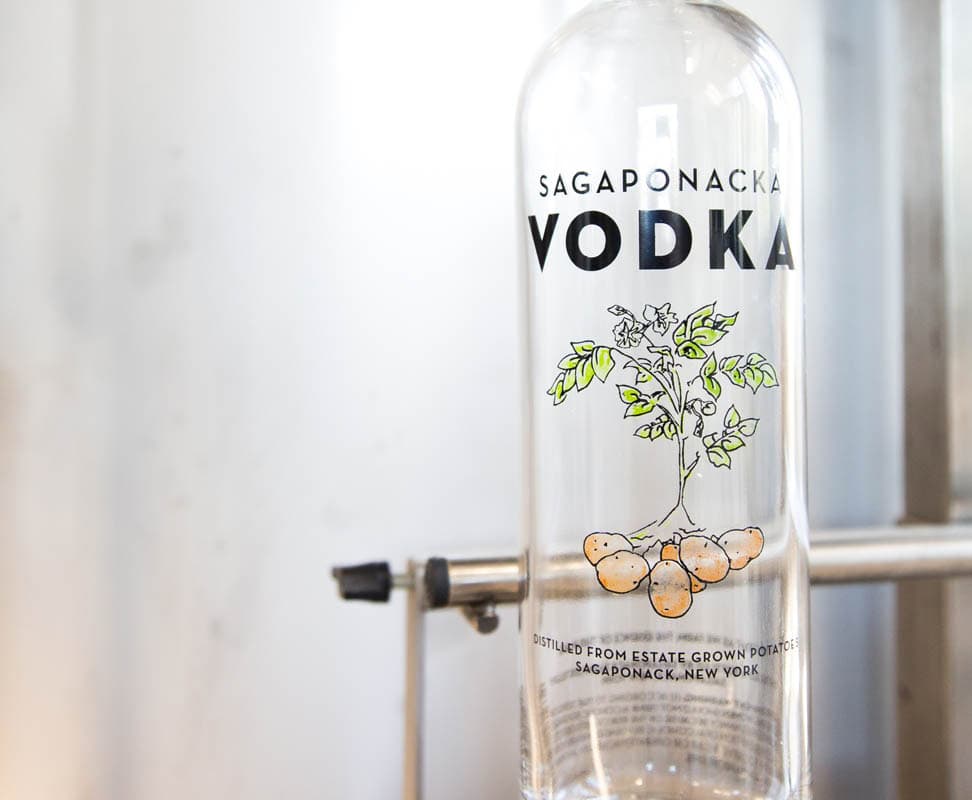
Marilee: There’s this goal for vodka in general that it should be odorless and tasteless but I don’t now why you’d want that unless the odor and taste are bad. We want it to sort of be emblematic of the farm we’ve got, the soil we’ve got, and why turn it into nothing? If you want odorless and tasteless, drink water.
Dean: Yes, this vodka thing is all wrong, you want your good vodka to have a little nuance to it. Why do you want some clear odorless thing, that’s no fun. You want it to emulate something good.
Do you see the distillery and tasting room as a way to help visitors understand—and value—Sagaponack’s agricultural integrity and the land itself beyond just property prices?
Dean: I think—I think there’s no question that—that a bar and—and a—and a tasting room is a place for conversation. So, it lends itself as a space for—for talking about that. And there’s no question being able to have a bottle with a patron who needs to be brought up to speed regarding that is a great thing to do. And I have done that myself many times and I’m sure Marilee has too. And—and the takeaway from that, yeah, you’re—no—there’s no question that patron that you were just talking to is kind of looking at you like, “Holy shit, right? This is—”
Marilee: I think it is—I think we kind of take alcohol for granted a little bit and you think about like, historically, alcohol was usually distilled where it was grown. They weren’t shipping things across country and—and bottling it in, you know—it—it really was a part of your community. Somebody had a still and—and I mean, that was all obviously taken apart through Prohibition and honestly just the way, you know, we’ve industrialized since. But most small towns, like you—you know, you go to Western—Eastern Europe, like, still, most small towns, like, at least have a—they’re not calling themselves “craft,” like, they’re—they’re 400 years old. And—and I think that that’s also what we were trying to create here is a bit of a legacy that will, you know, these whiskeys will—I mean, we might live a long time, but these whiskeys, hopefully, will outlive us, to some degree.
And I think that that’s—I think that’s kind of exciting, but I think what it also is, is it’s—it’s adding to the profile, you know, just sort of like how wineries—nobody really envisioned wineries here in the early ’70s, but now actually it’s a region. It’s a recognized appellation. So, it’s—it’s recognized as something of—in the wine world and I think that, you know, for us making whiskeys with our own grains in Sagaponack and it’s really about talking about this other value of Sagaponack that has nothing to do with the housing value, that has to do with literally the land and—and what it offers.

Dean: Well, you know, but there’s—there’s definitely one thing, though, that I feel that needs to be talked about more so than anything and that is, of course, everybody’s talks about health. Whether they just talk about it and they’re not doing anything about it, that’s whatever. But I feel that, you know, like I said before through—and when we’re talking about the conventional farming, you know, that we did on this land, I feel that—that it is the most important thing where we live here, relating to, you know, water recharge areas, so on and so forth, that the farmers that are now farming in this area have respect and understand that to its fullest capability because you—this soil can very quickly be compromised by—by bad stewardship.
And I think that that’s one thing that this distillery and our farm has really spearheaded since we’ve sort of moved away from that conventional side of things and that is really going at soil balance, really understanding the symbiosis, the—the mycelium and everything that happens within that soil making those connections that create that balance. Not to mention also, too, what—what better distillery could you be buying spirits from when you know their carbon footprint is basically zero? Because their distillables come from less than a half a mile down the road from where they are being farmed. Whereas a lot of these other distilleries have the shipping across the country from these huge warehouses that have been fumigated twice a year and all this bullshit, really, that these “craft” facilities I think really want to kind of part the ways and say, “Here we are, the real deal, you know?”
Marilee: I think trying—I think part of it is, though, I mean, is just trying to keep things relative in the modern era, right? We live—we have incredibly productive farmland. We have, even during dry times, our soil retains moisture. Like, really, the land on the—well, what was all of Long Island, but much of the East Coast, you know, is some of the best farmland in this country and should really be preserved for those reasons is that, you know, yeah, you can have a bad season, but fretting about it won’t change it. And that’s something I try to remember every night when I lie down. But I think also, you know, we’re both in our mid-50s and yeah, there’s—there’s other things to worry about and, you know, I think that’s one of the joys of working with nature is like, you can take the blame for a lot of things, but it’s not always your fault.
The Fosters are playing the long game, bottling their crops to create a legacy that they hope will outlive them. By treating their spirits as a literal extension of the soil rather than just another industrial product, they’ve managed to keep their carbon footprint basically at zero. If you want to move past the “odorless and tasteless” world of mass-produced vodka and actually taste the grain, there’s no better way than going straight to the source. Swing by the Sagaponack Farm Distillery tasting room to experience the “rhythm of the place” through a glass of Summer Whiskey or their experimental Single Spuds, then grab some fresh produce at Marilee’s farmstand to help keep this local resource thriving.