


Written By: Sydney Sadick
Photography By: Andrew Werner
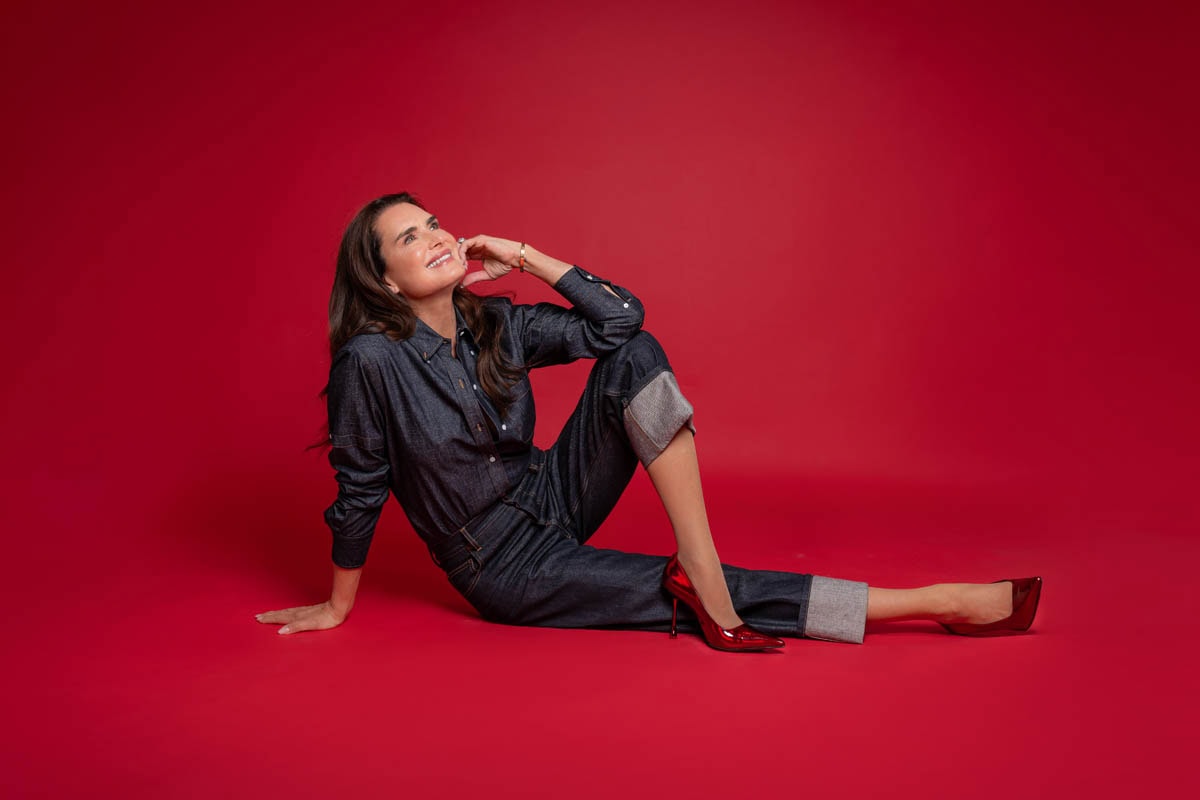
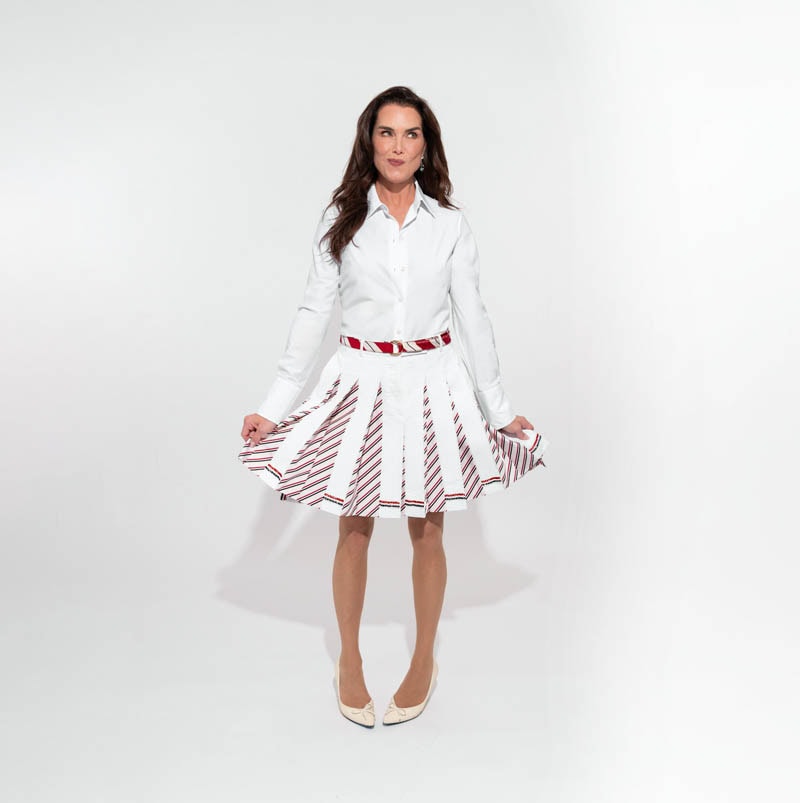
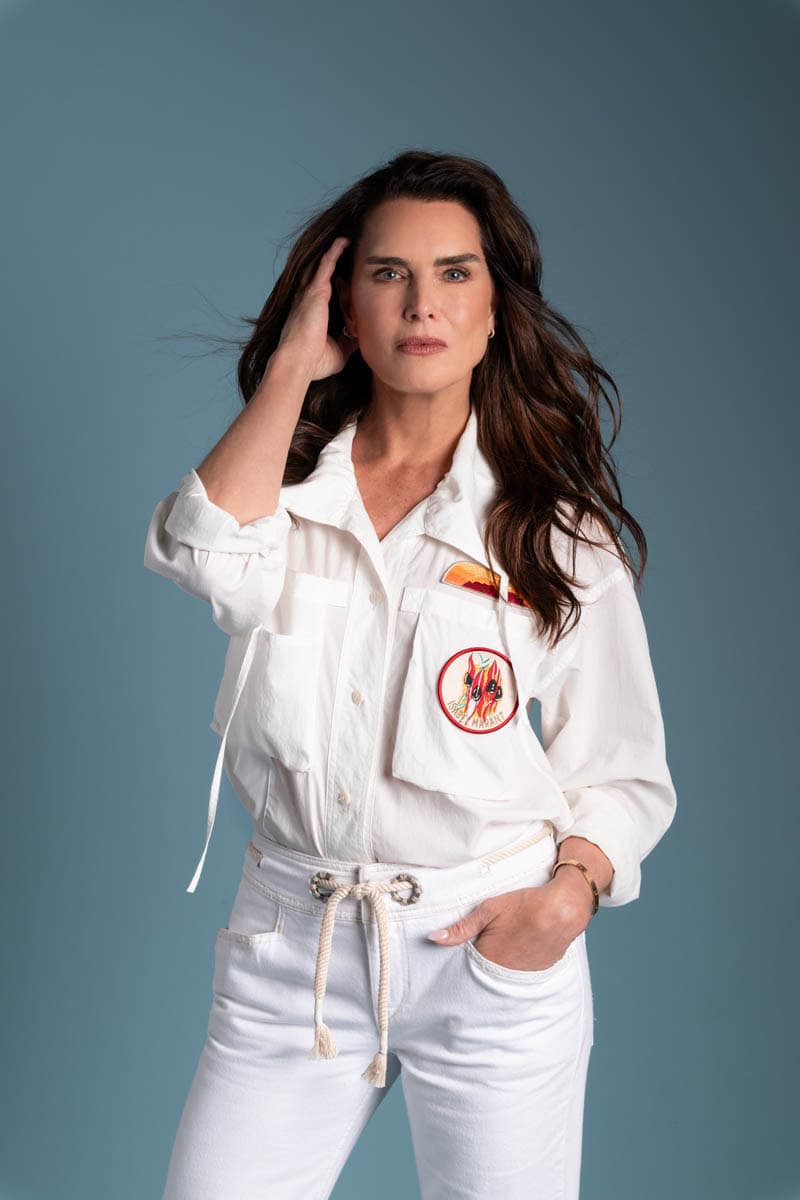
For decades, Brooke Shields has remained one of fashion and entertainment’s most recognizable faces—from iconic fashion campaigns and unforgettable red carpet moments to defining generations of beauty and style. But beyond the flashbulbs, Shields has always been fueled by something more lasting: community. After spending her childhood in the Hamptons, she still resides most of the year Out East today, where the quieter moments continue to shape her life. These days, she’s launching a clean haircare brand inspired by real conversations with women in her audience, and starring in and executive-producing a new TV series. Through it all, Shields is embracing reinvention with the same spark that first made her a household name.
Brooke, you’ve spent decades in the public eye. Why do you think audiences continue to connect with you generation after generation?
Oh, boy. I mean, you hope that they do, and you kind of can’t set out to do it. I think I just try to be honest and authentically where I am and given opportunities that I have to be creative. You can’t set out for people to relate to you. I think you just have to keep working hard, and hopefully there will be enough of a dialogue between you and your audience that they feel that they’re a part of the conversation.
Social media has also seemingly given you such a great way to interact directly with people.
My daughter helps me navigate TikTok and all that. I’m like, “I don’t know how to do this.” She’s like, “Oh, Mom.”
You’ve moved through so many worlds successfully—acting, modeling, fashion, Broadway, books. How has your definition of ambition changed over time?
I think I was born ambitious. I don’t think I knew that that’s what it was. But I’ve always wanted to learn more, grow, keep going, try new things. And when you get to be a certain age, you realize that that’s a form of ambition. My ambition was never about fame or even success. My ambition was more, How can I learn? I don’t know how to dance. I don’t know how to sing. How can I learn how to do that? Let me do that. To me, ambition is in the form of trying things and seeking things that you don’t necessarily feel comfortable with, but you can learn from. I’m probably even more ambitious now than I ever was.
What do you think has made you feel that way now? A lot of people slow down, and you’re still going strong.
I’ll stop when I can’t breathe anymore. I just feel lucky that I’m able to keep learning new things. Growth. And it’s amazing when you expose yourself to discomfort and you expose yourself to learning what you gain from it. You gain new relationships, you gain new skills, you learn where you’re not good. And you’re okay with that. But nothing is fear-based. Fear stops one. And I’d rather try and fail than be so afraid that I don’t try and never know.
You’re a symbol for women redefining what beauty and relevance looks like in their forties, fifties, and beyond. Was that something you consciously embraced?
I don’t think you can set out to create a movement or set out to take an iconic photo. I’ve just tried to live as authentically as I can at this age, and at every age. But I don’t think I’m redefining beauty or defining beauty. I was labeled pretty from the time I was a little kid. I had nothing to do with it. I was lucky enough that I could make it a business. And I was lucky enough that I understood what little value that actually has. I refuse to be made less than because I’m 61. And I think that if there’s a redefinition of beauty, it’s from the outside. But my definition of beauty has to come from my beliefs and my values—and that makes me feel prettier.
It’s no secret that your hair has been iconic for decades, which makes your Commence line feel especially authentic. What inspired you to enter the beauty space at this time?
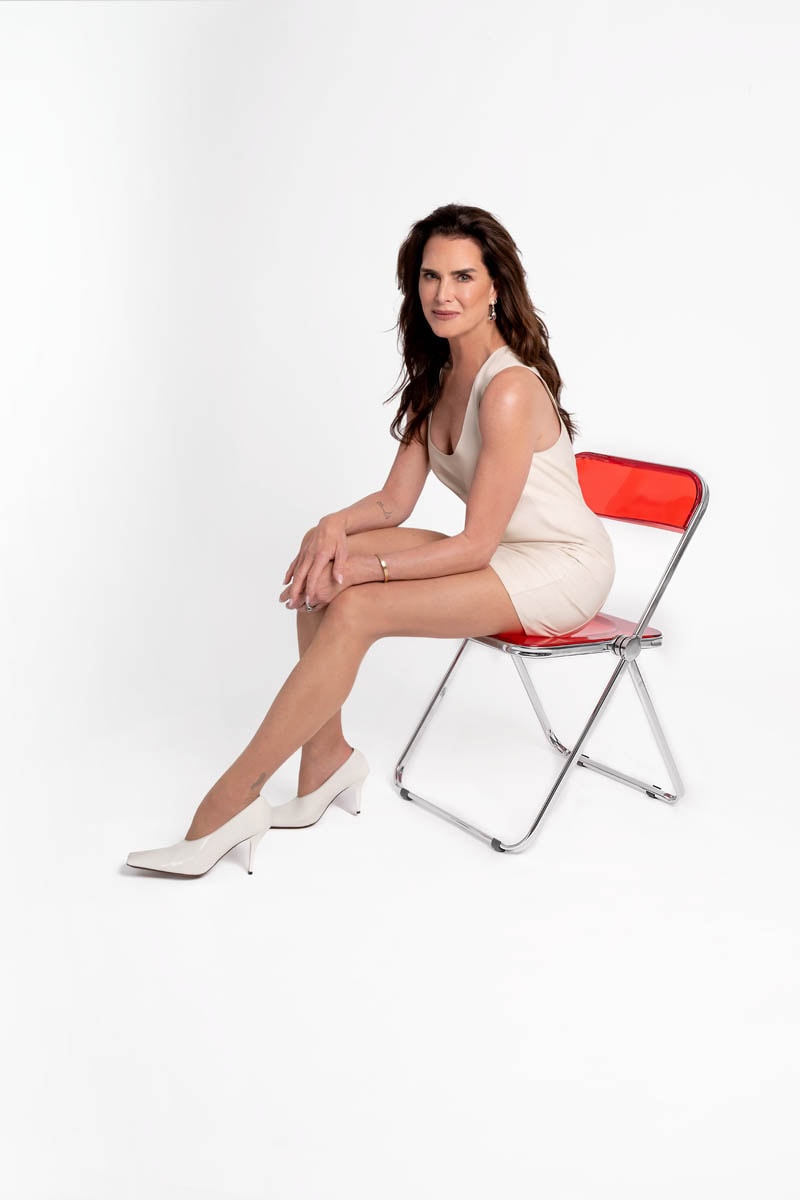
I had never intended to be in the beauty space. I had no desire. I really didn’t want to, and I was never going to go into skincare. I started a community of women during COVID, and from that this discussion around haircare for women over 40 began. Women’s hair changes dramatically over 40. Your pores shrink on your scalp, the luster of your hair, the quality, the width of each individual strand changes. There was no other haircare brand on the market that catered to this demographic, so that’s why I ended up starting Commence.
Was there ever a beauty look you regretted?
Oh, my God, of course. I remember I got my hair feathered and permed. I woke up, looked at myself in the mirror, fell back down, and started crying because I looked like I had been electrocuted. I should have never had a perm. And I should have never feathered my hair, which was a very ’80s thing to do. And maybe the side-part ponytail. That was not a good look for me.
What has surprised you most about being a founder at this stage in your life?
How denigrating a very male-dominated industry can be to female founders. What I’ve come up against with chauvinism and belittling has been the shock. The women that I’ve come across make you feel like you’re with them on a path where you’re feeding off each other. Men make you feel like you’re up against them. Business is its own animal, and it’s taken me a lot to learn. I’ve learned a lot on the journey of how a CEO looks, which is something I just never thought I would learn.
What do you teach your daughters as they head into their own professional lives?
To trust your instincts. Play the game to the extent that you can still learn something. You’re going to have to hustle. Keep your wits about you, find the right people to surround yourself with, and continue learning. One daughter works at a news channel, and I always tell her, “Be useful. Get there early, leave late. I don’t want you ever to be idle. Learn from the best.” When I first went into Broadway, I didn’t know what I was doing. So I would pick the best dancer, the best singer, and study them. My advice is keep learning, and keep hustling.
Who have been some of the most impactful people in your life?
They’ve been people all along the way. Ensemble members. Teachers. A gripper, a gaffer. The people that work hard and love what they do. It’s easy to be impacted by the huge powerhouses. It’s being able to be impacted by the person down the block—the person at the pharmacy, the person who was kind on the bus and knew my children’s names. Those are the people who are impactful because they are day in and day out of your life.
When you think back to your early Calvin Klein campaigns, what comes to mind now?
What Calvin and his team did was take a different stance with advertising. They made it more intellectual and cinematic. It wasn’t just holding something up and saying, “Drink this, buy this.” It was, “How can we turn this on its head?” I look back at that as probably one of the best things I’ve ever done, but I was just a conduit. Calvin was a visionary in that sense, and I was lucky to be a part of it.
Would you ever revisit a campaign like that again?
You can’t re-create the same magic. It’s like having a great party and then trying to throw the exact same party the next day. It’s just not the same. If they used me appropriately in a way that celebrates women in this generation, I think that could be really smart. But whenever you try to repeat something, it never seems as good.
Your TV show Lipstick Jungle still resonates with viewers today. Why do you think people continue to connect with it?
That show should have gone for eight seasons. We got totally screwed by TiVo. Overnight, advertisers pulled their money because viewers could fast-forward commercials. I loved that show. I would do a reboot yesterday because it was quintessential New York. It was female friendships in a non-cliché way—women supporting women, celebrating differences. That’s why that genre resonates.
Who do you still keep in touch with from the cast?
Lindsay [Price] and I talk often. I don’t speak to Kim [Raver] as much, but not because of anything—everyone’s busy.
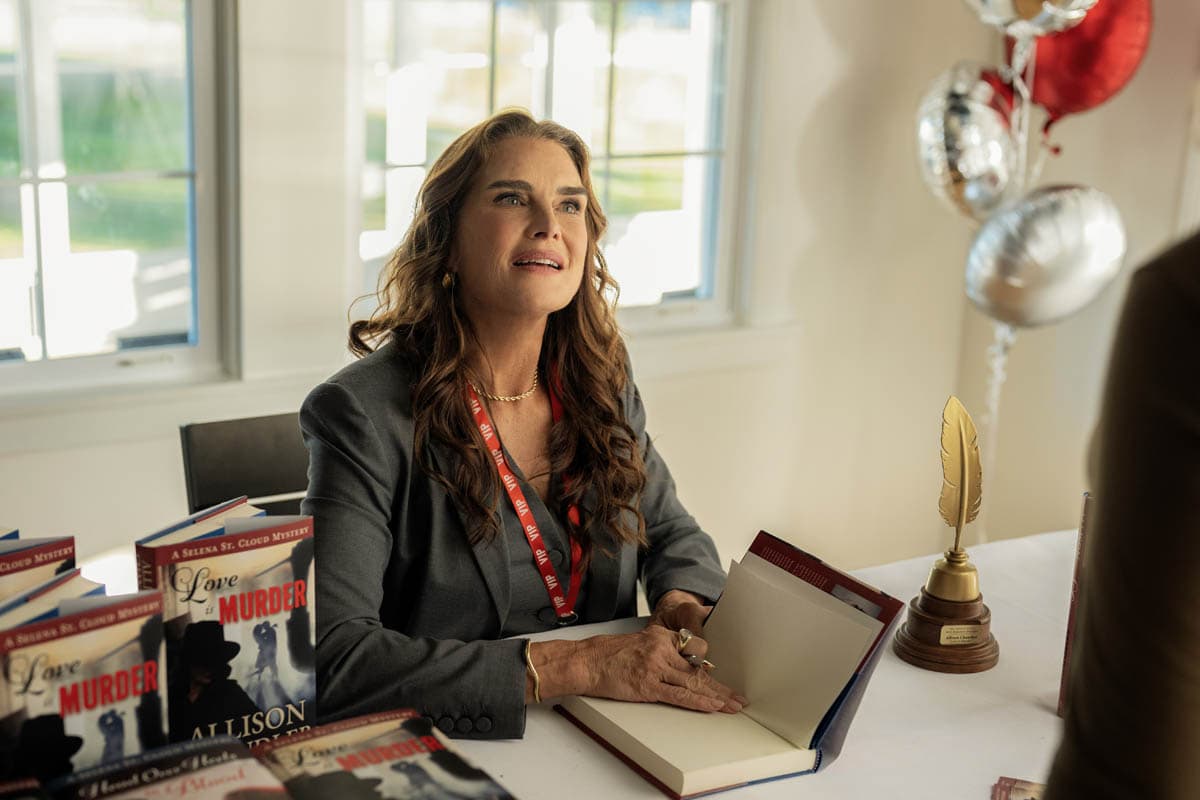
Now you’re starring in You’re Killing Me via the Acorn TV app on Roku. What excited you most about stepping into the world of murder mysteries and executive-producing this series?
I was interested in the character, who I helped create with Robin Bernheim, who’s our showrunner and writer. I was interested in looking at this generational divide between this young woman and my character, and how they needed to come together. The mystery genre feels sweet to me—very Agatha Christie, Only Murders in the Building, and Murder, She Wrote. There’s a murder, but it’s not gory. I love that kind of entertainment. I also loved exploring the dynamic between these two women. Becoming an executive producer allowed me to have more of a creative say, from location and casting to the edit itself. It’s also been fun leaning into the physical comedy, which many shows in this genre don’t have.
Speaking of worlds and communities that have shaped you, you’ve also had a long-standing relationship with the Hamptons. What are your earliest memories of summers Out East?
Well, I lived above the hardware store, and then I lived above Shippy’s in a one-room apartment with my mom. My dad was part of the beach club world and the fancier side of the Hamptons. My parents were divorced, but my mother wanted me to know both worlds. So during the day, I was with all the fancy people, and at night I was living above the hardware store. It was the perfect combination for me. I felt at home with the cops, the firemen, and the people who lived there year-round, while also being exposed to a completely different lifestyle through my dad’s family.
What makes up your Hamptons summer today?
It’s my year-round life. Every day I’m not working, I’m here—fall, winter, spring, not just summer. In fact, summer is almost the worst time because it’s so overrun. That said, I love that it supports the community and brings energy. But my favorite times are the fall and winter—cooking dinner with friends who live here full-time, sitting by the fire, having quiet nights in. It’s very different from what people traditionally think of when they think of the Hamptons. My dogs are happy here. I’m calm here.
Favorite Fourth of July traditions?
We have family friends we always go to, and they have a pizza truck, which is fun because they’re on the way to East Hampton. But honestly, I just love fireworks. We’ll literally map out a route so we can drive somewhere to see them because you can’t really see them where I live. That’s one of my favorite things.
You’re being honored at the East Hampton Emergency Department Luncheon. What does it mean to be recognized by the community in that way?
It’s lovely to be part of something where I can highlight the work they do every single day of the year. These people are unbelievably tireless. The work they do is 24/7. I’m just a conduit to shine a light on them. It’s less about me and more about the times I’ve personally gone to the emergency room, the times my kids have been there, and the incredible care they provide. I’m genuinely grateful to help bring attention to their work.
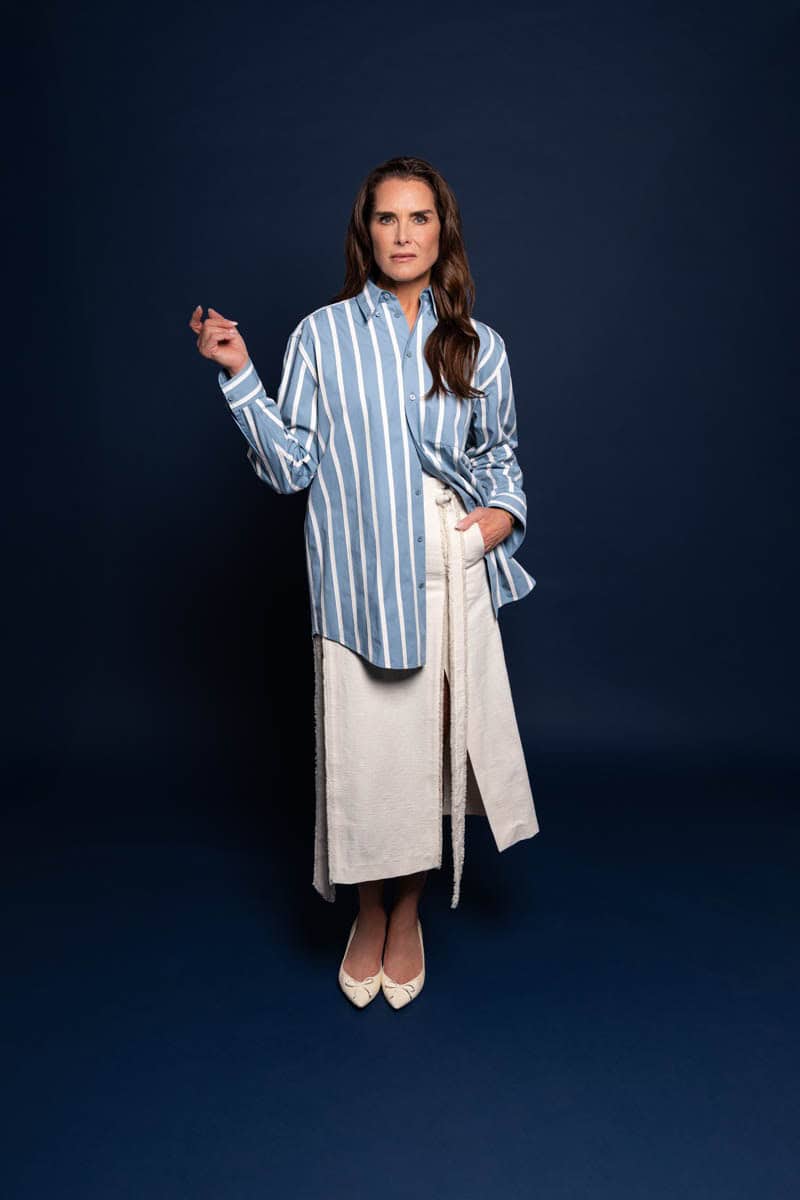
You’ve reinvented yourself so many times throughout your career and personal life. Is there still something on your bucket list you haven’t done yet?
Gorillas in Rwanda. That’s my next big thing. I’ve birthed baby lambs, designed a line of Murano glass, and I’m trying to experience all the things I’ve always wanted to do. Visiting the gorillas is next!

![Sculpture @ Sylvester Manor: [R]evolution](https://hamptons.com/wp-content/uploads/event-manager-uploads/event_banner/2021/07/manor_house-350x350.jpg)


