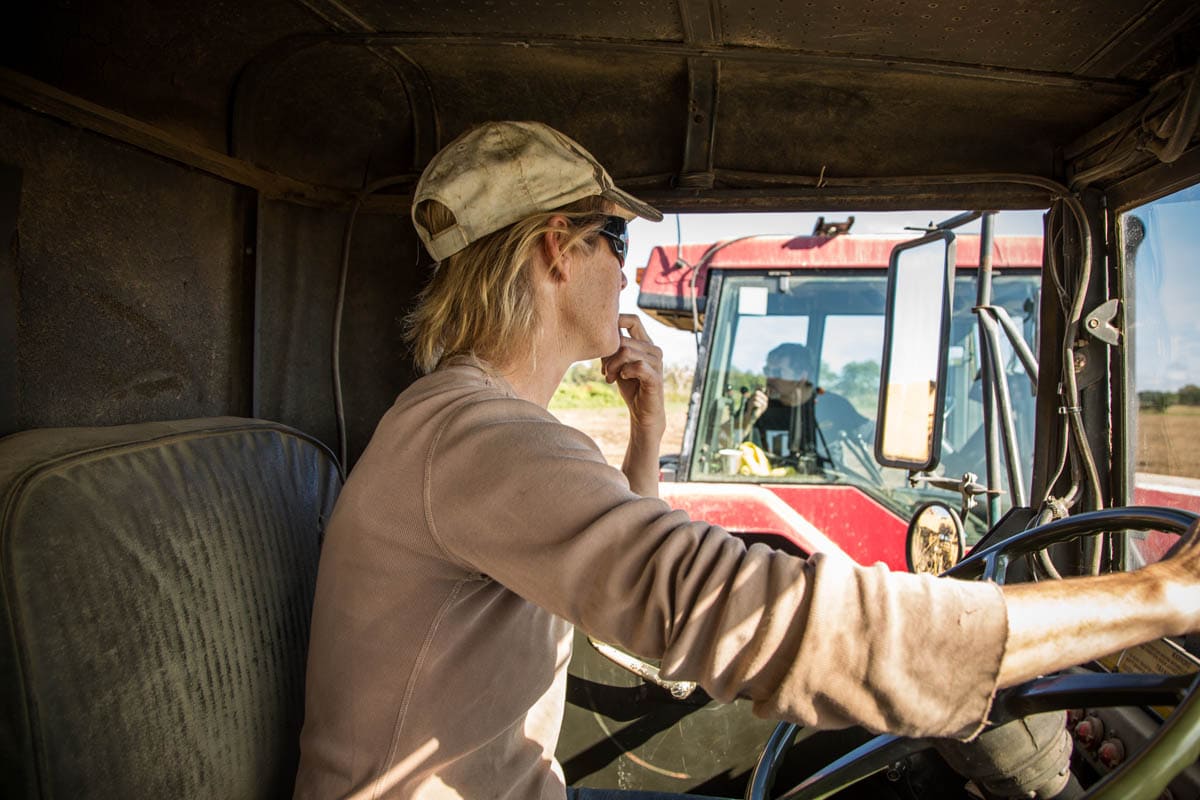
For this multi-generational farming family, the Sagaponack Farm Distillery represents a “vertical integration” of their heritage—a process where heirloom crops like Bloody Butcher corn and naked oats are grown, harvested, and bottled within a half-mile of the still.
I sat down with Dean and Marilee Foster to discuss the rhythms of farming and distilling, the challenges of working with the land, the importance of preserving Sagaponack’s agricultural heritage, and how thoughtful stewardship can help shape the future of the East End.
Is there a rhythm to farming that coincides with distilling?
Dean: That’s right. Being a farmer and the distiller too, it actually completes the year for me. We spend all season growing it and then you spend all winter distilling it. So there’s not much downtime reflecting and trying to get equipment worked on and everything else. Marilee and I are both still trying to figure out all those elements and trying to keep the farm up and in shape so we can go into the following year without too much tension.
Marilee: It does make sense, you spend the entire season growing it and then you have this period of time, during the quietest months, for farming anyway, to preserve it all. And that’s really what vodkas and whiskey are.
Dean: Instead of canning, we’re bottling.
Marilee: It is I think though there’s no question there’s something really connected here. Dean and I come from a big potato farm where we were handling potatoes, you know, in some cases like 200 days out of the year. Not only did that become like financially treacherous, there’s something really nice about knowing you’ve got this, this perfect product that you raised in the field, it’s a beautiful crop and then you can just kind of bide your time as opposed to feeling pressured by the fresh market, pressured by how little the brokers are going to pay you, to know we’re farming on a smaller scale but again it’s like vertical integration, right? We’re keeping it all right here and we’re managing, you know, exactly how we want to use it and it’s like you feel a little bit less led by your nose, but of course we are.`
Like they say, farming would be easy—if not for the weather.
Dean: Yeah, that’s certainly true for the last, I would say, for the last three years. Getting the crop in has been a…
Marilee: A total nail-biter.
Dean: Yeah, it’s been like if I don’t get it today, I’m not going to get it, you know? So—so here’s one, actually I was telling Marilee the other day, or—we’re just discussing it. So, you know, the way we grow corn for this distillery is—is, you know, in a conventional planting matter but not cultivation to stay away from all of the giant shots of herbicide, so on and so forth. When it comes time to cut it, I try to let the corn dry down in the field as long as I possibly can for the simple reason that if you don’t, then you actually have to dry it, and when you dry it, it actually goes through a heater. When it goes through a heater, you actually are bringing that corn up to where it will steam. And so by doing that, you’re actually taking away some of the nuances that we actually want to have go into that barrel. So, as we all know, we had a terrible season and as a result a terrible year for the birds, all the migratory birds were starving to death and also sick, right? Well, they found my cornfield. And I went up there earlier this spring thinking, okay, the snow’s melted, maybe there’s still some of this corn out there, maybe I can get the machine in it and get some of it off. I’ve got one distiller that really wanted some white corn. I go there, Stephen, and every single ear of corn looked like it had been through a threshing machine. It had no kernels on it and it was all eaten. I mean, just you couldn’t find any corn in the field.
So I just stood back for a minute and I thought to myself, wow, I’ve—those birds were really hungry. And you know what? I fed ’em. Right? So what—what better could have happened to that corn? You know, those—you know, I watched birds die this year because it was just so cold. It was just so cold. And I, you know, I was running my snowmobile around and I would see 12 geese in the field with their heads tucked behind—underneath their wing, and you knew they were just, you know, trying to wait out the cold. The next morning I went up and zipped there, they were all still there, dead. And so I started spreading corn and grain around the farmyard every morning so that all the birds that couldn’t find anything to eat in the snow had a place to come to and it was—it was pretty remarkable. I had geese landing in between the buildings at the farm, which they would never do because, you know, there could be a dog or a fox or something there. But they were so hungry, didn’t make a difference.
Marilee: And just quickly about the grains, it’s just weather, right? So trying to get the rye, the oats, the wheat harvested in the summertime, I think it’s a little bit like the grape harvest in the sense that, you know, they have eight or ten varieties out there. And sometimes like, yeah, the Blaufränkisch didn’t come out, but look at the Chenin’s beautiful. And so it’s like we’ve lost parts of crops, but you know, you’re always sort of hedging your bets and it’s like, okay, well we’re not making that this year, you know, but you hopefully still have a library of aging spirits. So if you have a light year, go harder the next year, you can bring up your volumes again. So you have time to try to correct if something goes wrong.
So is planting multiple varieties your way of hedging against bad weather—and keeping enough in the pipeline to ride out a light year?
Marilee: Yeah. Exactly. For sure. Just like tomatoes.
Tell me about your position on organics vs conventional farming.
Marilee: Yup. Organic seed, untreated. Absolutely. Uh-huh. Yeah, you know I’ve been in the farming, you know, industry long enough to understand the poison aspect of what conventional farming can bring forward to the consumer and—and even the workers. And I—I feel like it’s just really no place to be anymore. I mean, I realize that if indeed it probably wasn’t done, then there’d probably be a lot of starving people in the world.
Dean: Yeah. Yeah. But no, there’s some—I mean, it is—it’s really, you know, again, I use that—I use the word “balance” all the time. It really is about balance. You really have to create that balance that you feel that you’re comfortable with.
What heirloom grains and potato varieties do you use in the spirits? And how do they contribute to your overall farming business?
Marilee: We’re using heirloom Bloody Butcher corn and our own potatoes for the Single Spud spirits. It’s about finding creative ways to make the land profitable while staying true to what actually grows well in this soil. It creates a financial ‘staying power’ for the land that housing values alone can’t provide.
For homeowners—especially part-time residents—should they plant their own edible gardens?
Marilee: No, better if part-time residents plant for pollinators and birds. And shop at farm stands and farmers markets. Since farmers have lost the regional market, a local market is super important to us maintaining the resource.
When we talk about the future of Sagaponack, what are the better ways for people to build and live here?
Dean: A better way is to work with the natural contour and biology of the land rather than trying to overwrite it with a construction project. If you’re developing, stop scraping the topsoil and start respecting the nutrients that are already there. If you take the topsoil off, which took thousands of years to form, and we put sod down, then you have to put chemicals on the sod to keep it green because there’s no nutrients left in the subsoil. It’s a vicious cycle of trying to force nature into a facade.
How does the local geology, specifically the moraine we live on, impact the work you’re doing here?
Dean: We use the water from the moraine, but it’s really about the butterfly effect. Think of the aquifer like a giant funnel; everything you put on the surface eventually migrates down into that center point. If I have a pond over here and I leave it open, three miles away the water table is going to drop and the algae is going to bloom. I’ve seen it from the air. Everything is connected through that aquifer. The most significant ‘local’ ingredient isn’t grown; it’s pumped.
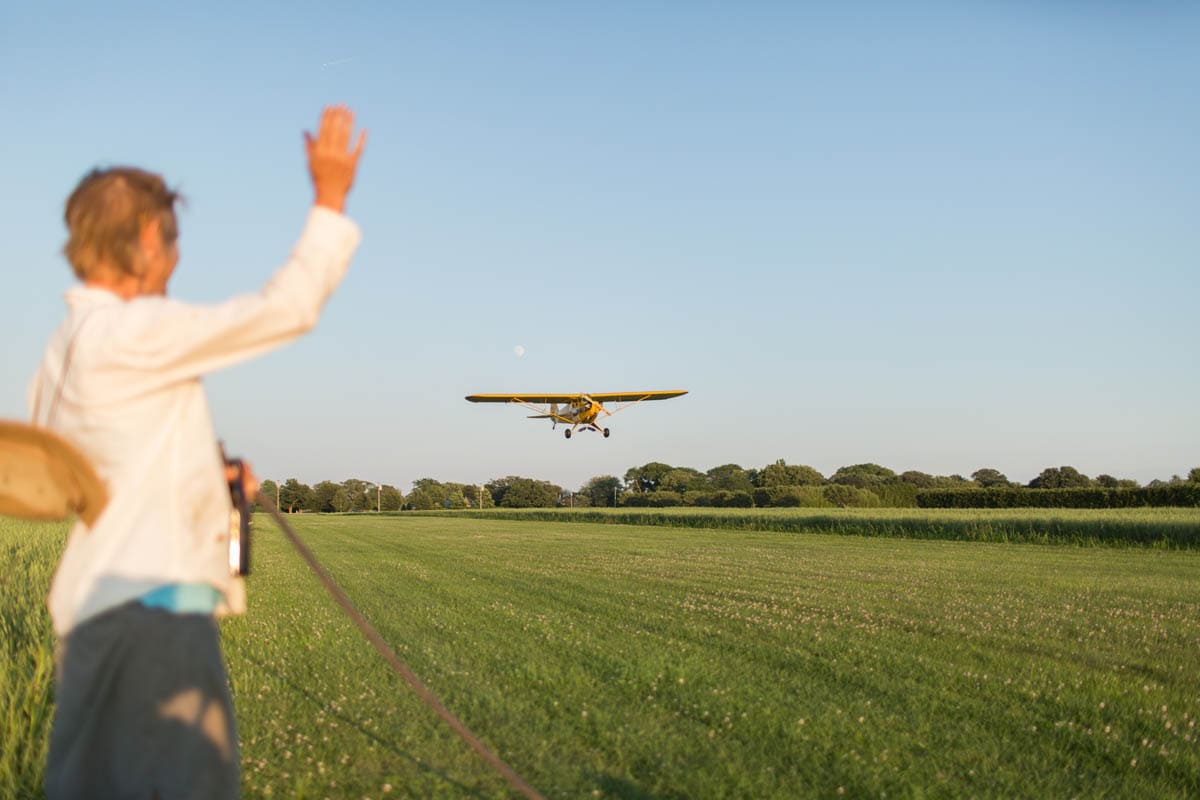
Dean, you wear a lot of hats—farmer, distiller, and pilot. How does that combination shape how you look at this landscape?
Dean: As a pilot, I get to see the whole picture from above, seeing how the neighborhoods connect, and as a farmer and distiller, I’m deep in the details of the soil and the water. It gives me a unique perspective on how everything is connected; you see the ‘butterfly effect’ of land use in a way most people don’t because they’re only looking at their own property.
Marilee, you’re involved in the land in a very hands-on way, even beyond your own acreage. How has managing other people’s properties changed your view of the neighborhood?
Marilee: I’m managing other people’s property that’s not mine, so I get to see it from their perspective and the neighbor’s perspective. It’s a very different experience than just farming your own land because you see the expectations of what a ‘Hamptons’ property should look like versus what the land actually wants to be.
Sagaponack is known as some of the most valuable real estate in the country. How do you see it?
Marilee: It’s really about talking about this other value of Sagaponack that has nothing to do with the housing value, that has to do with literally the land and what it offers. We focus on staying power and preserving the agricultural integrity of the place.
Is there a disconnect between the “farm aesthetic” people want and the actual reality of maintaining this land?
Marilee: People come out and they want the ‘look’ of the farm, but they don’t always understand the work of the farm or the reality of vertical integration. We are trying to keep the distillables within a half-mile of where they are processed to keep it authentic. While many estates aim for a ‘farm aesthetic,’ the distillery is a functional farm.
When a new estate is built, we often see the “wild” parts of the land disappear. How does that affect the local ecosystem?
Marilee: When you put in a lawn, you’re taking away the habitat. We had a field of cosmos that stayed in bloom until November—that’s where the pollinators are, not on a manicured lawn. If you don’t have the patience to let the cosmos bloom, you’re missing the point.
You talk a lot about “grounding.” Why do you think that’s becoming so difficult for people moving to the East End?
Dean: Everything is grounded. If you don’t ground yourself, the frequencies in your brain and your body will start to get messed up. We’ve got shoes with two-inch soles now; we aren’t even touching the earth anymore. We’re isolating ourselves from the very thing we came here for.
For more info, visit sagaponackfarmdistillery.com